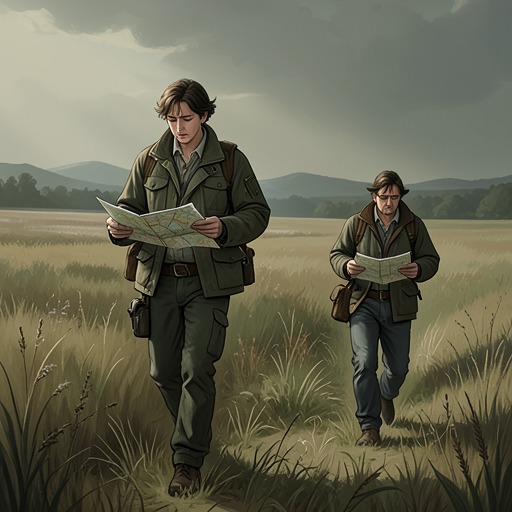
It’s not what you take, it’s what you leave
All the Bright PlacesIt’s not what you take, it’s what you leave is Violet’s closing insight about her and Theodore Finch’s wanderings: their meaning does not depend on filming every stop, keeping souvenirs, or assembling a record that other people can understand. The expression shifts attention from possession and proof to the traces a shared life leaves behind.
Meaning in the Wandering Project
Violet considers the absences in the project directly. She does not need to regret that she and Finch never filmed their wanderings, gathered souvenirs, or found time to organize everything into a coherent account for anyone outside the two of them. What might look like an unfinished record becomes beside the point: the value of the experience was not contingent on preserving it as an artifact.
Her realization recasts the wandering as something measured by its effect and legacy rather than by what could be carried home. The phrase does not deny the importance of what the pair experienced; it changes the measure of that importance, from what they took away to what remains because they were there together.
The Closing Scene
The thought comes amid Violet’s private acts of remembrance. She reads papers again and again, folds them back into an envelope, and sits in the chapel until her tears stop and dusk fills it with a soft pink light. After driving home in the dark, she plays notes from staff paper on her flute. The tune stays with her for days, becoming something she continues to sing.
That sequence gives the expression a concrete resonance: the keepsake and written music matter, but their significance lies in what they carry forward in Violet, not in their value as collected objects. The tune persists beyond the chapel and the moment of reading, just as the shared wanderings do not require a complete public record to remain meaningful. The realization closes on a quiet distinction between preserving evidence of an experience and living with what it leaves behind.